
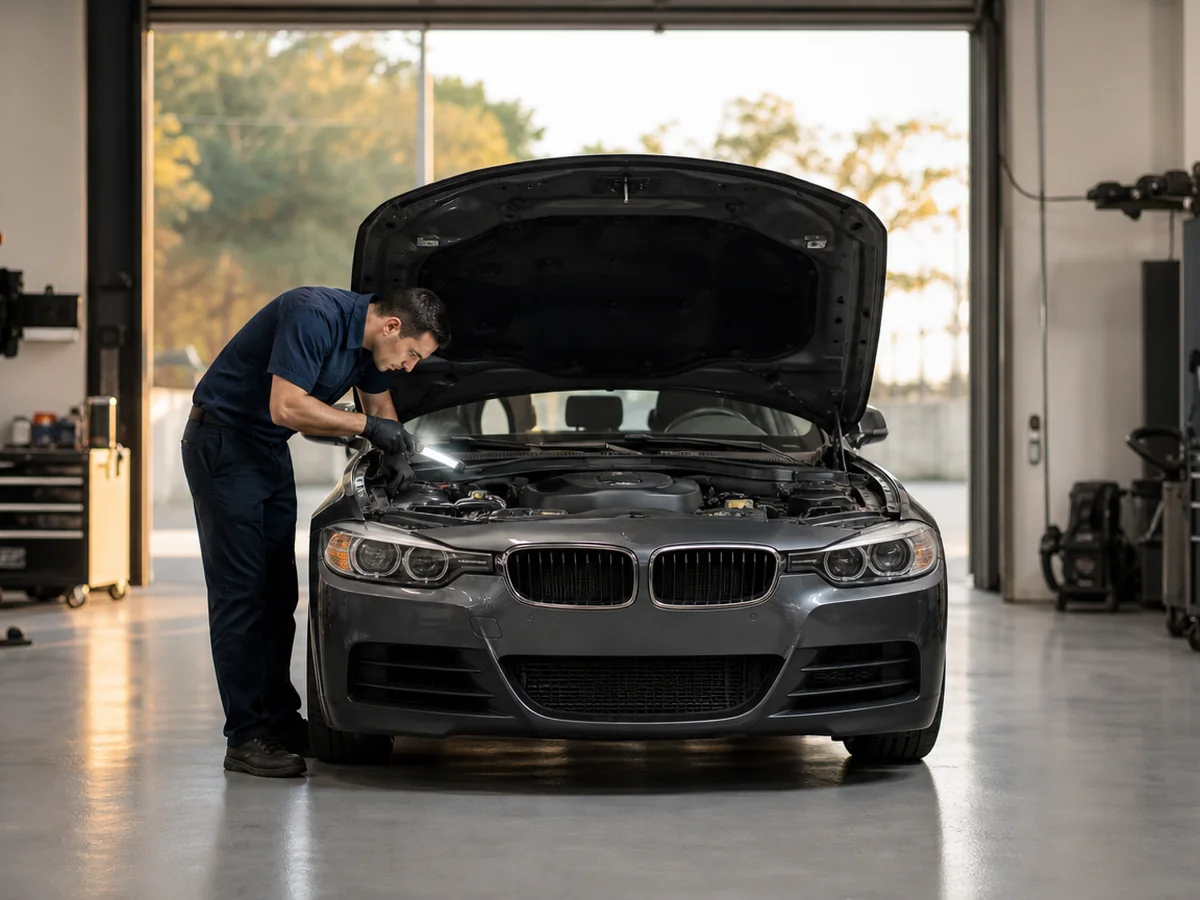
North Texas is hard on cars. A BMW that lives in McKinney, Frisco, or anywhere across Collin County spends four or five months a year in triple-digit heat, then sits in stop-and-go traffic on the Dallas North Tollway with the air conditioning working as hard as the engine. That combination does more long-term damage to seals, fluids, and cooling components than most owners realize.
Here is what the heat actually does to your car, and how to get ahead of it.
Why Texas heat is different for a BMW
BMW engines are designed to run hot on purpose. Normal operating temperature on most modern BMW and MINI engines sits between 200 and 230 degrees Fahrenheit. The engine management system raises coolant temperature deliberately to improve combustion efficiency. That design already leaves less margin for error, and a Texas summer pushes every cooling component toward the edge of its range.
Three things happen at once:
- Plastic and rubber age faster. Radiator end tanks, coolant expansion tanks, thermostat housings, valve cover gaskets, and oil filter housing gaskets all become brittle. On an N20, N55, or S55 engine, a cracked expansion tank or a leaking oil filter housing gasket is one of the most common failures we see on cars that spend their lives outdoors.
- Fluids break down sooner. Oil oxidizes faster, brake fluid absorbs moisture faster, and coolant loses its corrosion inhibitors faster. A car driven in North Texas realistically needs fluid services on the shorter end of BMW’s recommended intervals.
- The cooling system works overtime. Sitting in traffic with the A/C on means low airflow across the radiator plus high heat load. Electric fans, water pumps, and thermostats cycle far more often than they would on a highway-driven car in a milder climate.
BMW maintenance that matters most in North Texas
1. Cooling system inspection every year
Not every year of ownership, every calendar year. Have the cooling system pressure-tested and inspected for weeping at the expansion tank seams, radiator end tanks, water pump, thermostat housing, and every hose connection. Catching a slow coolant seep before it becomes an overheat event is the difference between a $400 repair and a warped head.
2. Oil changes on the short side of the interval
BMW’s Condition Based Service (CBS) system can stretch oil intervals past 10,000 miles on a highway car. In North Texas heat with short trips and traffic, that is too long. We recommend an oil and filter service every 5,000 to 7,500 miles on turbocharged engines, and always before a summer road trip.
3. Brake fluid every two years, without exception
Brake fluid is hygroscopic, meaning it absorbs water from the air. Heat accelerates the process. Moisture in the system lowers the boiling point and invites corrosion inside the calipers and ABS pump. A two-year brake fluid service is one of the cheapest insurance policies on the car.
4. Battery and charging system check before the first cold snap
Heat kills batteries quietly. A battery that survived a Texas summer often fails on the first genuinely cold morning in December or January. Have the battery load-tested and the charging system checked in the fall, not after the car will not start.
5. Air conditioning service before June
A BMW A/C system that is 10 percent low on refrigerant can lose 30 percent of its cooling capacity. An annual A/C performance check and leak inspection in the spring keeps the cabin comfortable and prevents the compressor from working itself to failure.
6. Suspension and bushing inspection
Heat, ozone, and pavement expansion joints all take a toll on control arm bushings, sway bar bushings, and strut mounts. Worn bushings cause vague steering, uneven tire wear, and clunks over expansion joints. If your BMW feels looser than it did two summers ago, bushings are a likely culprit.
A realistic North Texas BMW service calendar
- Spring (March-May): A/C performance check, cooling system inspection, brake fluid if due, tires and alignment.
- Summer (June-August): Oil and filter service, coolant level and condition check, watch for any coolant smell or low-coolant warning.
- Fall (September-November): Battery load test, cooling system pressure test, suspension and bushing inspection.
- Winter (December-February): Oil service, brake inspection, and any deferred maintenance before the next heat cycle begins.
Where to take your BMW in McKinney and Frisco
Mporium BMW is an independent BMW and MINI specialist at 10015 Rearwin Lane in McKinney, TX 75071, about 12 miles north of Frisco. We are not a general repair shop that happens to see BMWs. Every car in the bay is a BMW or MINI, and we handle everything from routine BMW maintenance and service to rod bearing replacement, VANOS repair, and performance work.
If you drive a BMW or MINI in Frisco, Allen, Prosper, Celina, or anywhere else in Collin County, book an appointment and we will build a maintenance schedule around how you actually drive the car.
Frequently asked questions
How often should a BMW be serviced in Texas?
Plan on an oil and filter service every 5,000 to 7,500 miles, a cooling system inspection annually, brake fluid every two years, and an A/C check each spring. Texas heat shortens every one of those intervals compared with a mild climate.
Is it normal for my BMW to run hot in traffic?
Elevated temperature in stop-and-go traffic with the A/C on is normal. A temperature gauge that climbs past the normal range, a coolant warning, or a sweet smell under the hood is not. Have it inspected immediately.
Does heat really kill BMW batteries?
Yes. Heat accelerates the internal corrosion that eventually causes a battery to fail. Most Texas battery failures show up on the first cold morning after a hot summer.
Can I follow BMW’s recommended service intervals exactly?
You can, but in North Texas we recommend the shorter end of every interval, especially for oil and coolant services and for any car that does a lot of short trips or heavy traffic driving.
Ready to get ahead of the heat? Book your BMW service appointment with Mporium BMW in McKinney, TX.